Health and Safety Policy for Landscaping Brimsdown
 Health and safety is a core part of every landscaping activity carried out in Brimsdown. This policy sets out the principles and working practices that help protect employees, contractors, clients, visitors, and members of the public during day-to-day landscaping work. It applies to all operations, including garden maintenance, soft landscaping, hard landscaping, planting, turfing, clearance, and use of tools and machinery. The purpose of this policy is to reduce the risk of injury, illness, property damage, and environmental harm while maintaining high standards of service.
Our Commitment
We are committed to creating a safe working environment through planning, training, supervision, and regular review. Every landscaping project should be carried out in a way that identifies hazards early and controls them effectively. This includes considering weather conditions, ground stability, manual handling demands, tool safety, and the presence of hidden hazards such as underground services, sharp debris, or uneven surfaces. Safety must never be treated as secondary to speed or convenience.
All staff are expected to follow this policy, use equipment properly, and report concerns immediately. Managers and supervisors are responsible for making sure work is planned appropriately, that workers are competent for the tasks assigned, and that suitable protective measures are in place. A positive safety culture depends on everyone understanding that safe practice is part of quality landscaping, not an optional extra.
 Risk assessment is carried out before work begins and updated when conditions change. Each site should be reviewed for hazards including traffic movement, slips and trips, electrical sources, overhead obstructions, unstable structures, chemicals, and restricted access. Controls may include barriers, signage, safe work zones, safe storage, and task-specific procedures. Where necessary, work should be paused until risks are reduced to an acceptable level.
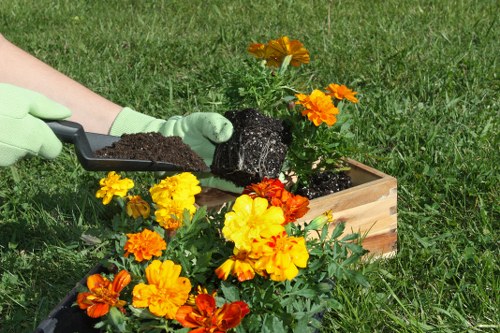
Personal protective equipment must be selected according to the task. Common items may include gloves, safety boots, eye protection, hearing protection, high-visibility clothing, and suitable weather protection. PPE must be maintained in good condition and worn correctly. It should never be relied upon as the only control measure. The first approach should always be to eliminate or reduce the hazard through planning and safe working methods.
Tool and equipment safety is essential in landscaping work. All powered and hand tools should be inspected before use, cleaned after use, and stored securely. Defective equipment must be taken out of service immediately. Guards, switches, cables, and moving parts should be checked regularly. Only trained and authorised personnel may operate machinery such as hedge cutters, strimmers, compactors, or powered digging equipment.
 Manual handling tasks are carefully assessed to prevent strain and injury. Workers should use mechanical aids where possible and ask for assistance with heavy, awkward, or repetitive loads. Lifting techniques, posture, and pacing matter, but proper planning is even more important. Materials should be delivered and positioned to reduce unnecessary carrying, bending, and twisting. If an item seems too heavy or awkward, it should be moved using a safer method.
Chemicals, fuels, and other substances used in landscape maintenance must be handled responsibly. Safety data should be reviewed, containers labelled clearly, and storage kept secure and well organised. Spills must be controlled promptly, and waste must be disposed of in line with relevant requirements. Mixing products should only be done by trained personnel using the correct precautions. Food, drink, and smoking must never be allowed where hazardous substances are stored or used.
Environmental and public protection are also part of safe practice. Work areas should be kept tidy to prevent trips, cuts, and obstruction. Debris must be removed regularly, and materials should not be left where they could create danger to pedestrians, neighbours, or site users. Noise, dust, and vibration should be managed sensibly, especially when operating machinery near occupied spaces. Landscaping teams should work with care and respect for the surrounding environment.
Training, Supervision, and Communication
Effective training supports safe performance across all landscaping tasks. New workers should receive induction on site rules, emergency arrangements, hazard reporting, and the correct use of tools and PPE. Additional training should be provided for higher-risk activities, such as chainsaw-related work, pesticide handling, or machinery operation where applicable. Supervisors must ensure that workers understand instructions and are competent to complete the task safely.
Communication is essential to maintaining a strong landscaping health and safety policy. Daily briefings, task instructions, and clear handover notes help prevent misunderstanding and duplication of work. If conditions change, such as sudden rain, high winds, poor visibility, or unexpected site hazards, the team should reassess the situation and adapt the plan. Everyone has a responsibility to speak up if they notice something unsafe.
Accidents, near misses, and unsafe conditions must be reported, recorded, and reviewed. Investigations should focus on identifying root causes and preventing recurrence, not on blame. Lessons learned should be shared where appropriate so that work practices can improve over time. Continuous improvement is a practical part of maintaining safe and reliable landscaping services.
Emergency Arrangements and Welfare
 Emergency arrangements should be understood by all workers before work starts. This includes knowing what to do in the event of injury, fire, chemical exposure, extreme weather, or contact with hazardous equipment. First aid materials and trained personnel should be available where required, and emergency procedures should be kept simple, clear, and accessible. Access routes must remain open for emergency response at all times.
Welfare is an important part of safe working in Brimsdown landscaping operations. Workers should have access to drinking water, rest breaks, and appropriate sanitation arrangements where needed. Fatigue can increase the risk of mistakes, so work schedules should allow for safe pacing, especially during physically demanding or repetitive tasks. Extra care should be taken during hot, cold, or wet weather to avoid illness and reduce the chance of incidents.
Vehicle movement, loading, and unloading present additional risks that must be controlled. Reversing should be avoided where possible, or managed with clear visibility and guidance. Loads must be secured properly, and routes should be checked before movement begins. Drivers and site workers must remain alert to pedestrians, obstacles, and changing site conditions. Safe transport and site access are as important as the work itself.
Review and Responsibility
 This policy will be reviewed regularly to ensure it remains effective, practical, and relevant to the work being carried out. Changes in equipment, methods, legislation, or operational needs may require updates to the way hazards are managed. Reviews also provide an opportunity to reinforce good practice and improve compliance across all areas of work. A policy is only useful if it is actively followed and kept current.
Overall, this health and safety policy for landscaping reflects a commitment to responsible working methods, careful planning, and respect for everyone affected by the work. By combining training, supervision, communication, and sensible risk control, landscaping activities can be completed safely and professionally. Every person involved in the work shares responsibility for maintaining standards and supporting a safe working environment.
In summary, safe landscaping depends on awareness, preparation, and consistent good practice. When teams take hazards seriously and act promptly to reduce risk, they protect people, property, and the quality of the work. This policy should guide everyday decisions and support a culture where safety is built into every stage of the job.